
Ron Wong
86-13380258855
sales@rongroup.co

Many high-capacity dining spaces struggle with the same challenge: accommodating more guests without making the environment feel crowded or institutional.
The restaurant concept featured here offers a practical answer.
Developed by RonGroup's in-house design team, these renderings showcase how thoughtful furniture planning can transform a large commercial dining area into a space that feels bright, welcoming, and efficient. While designed as a modern cafeteria concept, the principles behind this project apply equally well to hotel dining rooms, university food halls, healthcare facilities, and employee restaurants.
What makes this design particularly successful is not one dramatic feature, but the way multiple furniture decisions work together to improve the dining experience.
A High-Capacity Layout That Doesn't Feel Crowded
One of the first things guests notice in this concept is the sense of openness.
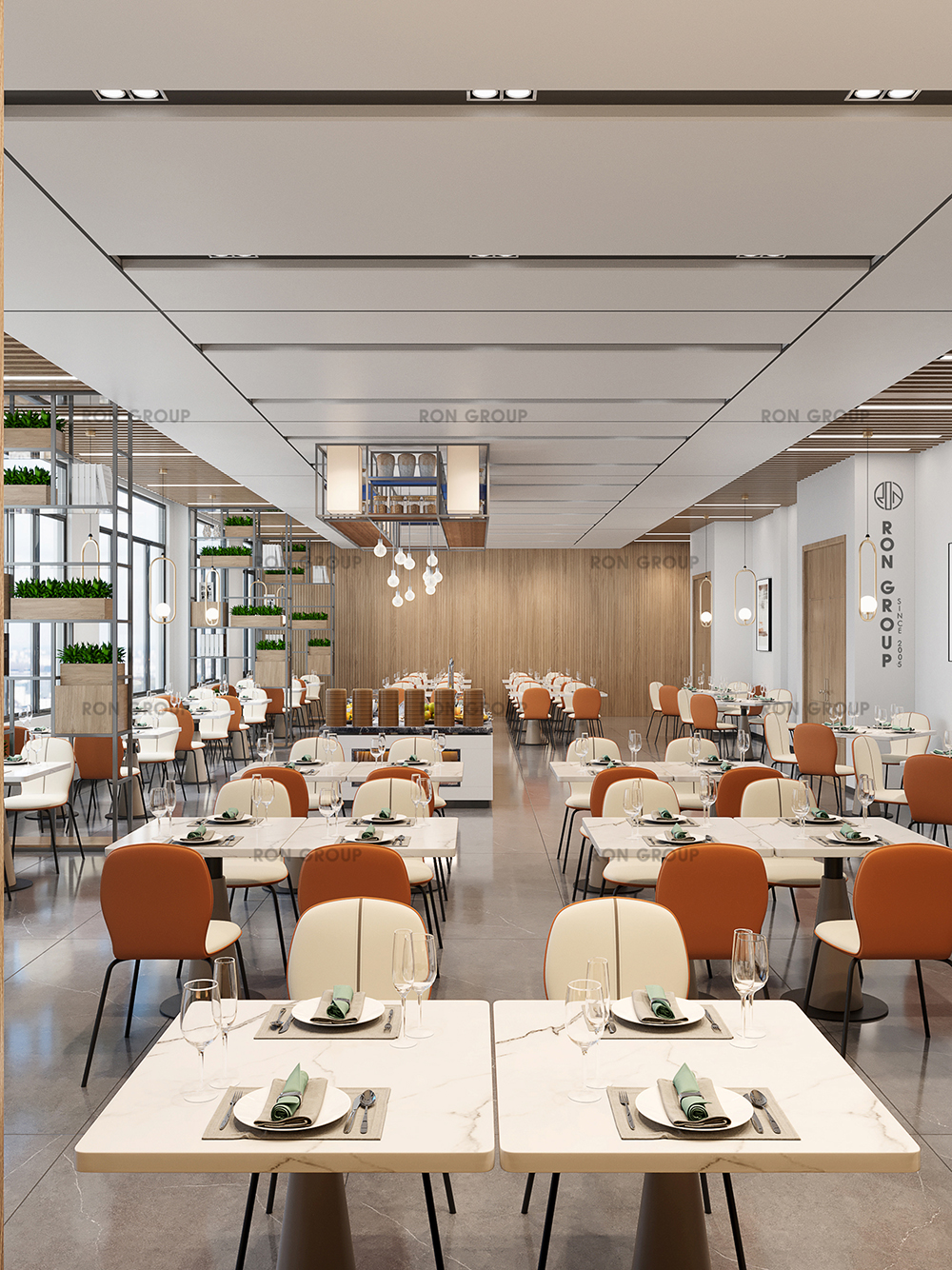
Despite accommodating a large number of diners, the layout avoids the packed appearance often associated with cafeterias. Tables are arranged in orderly rows with generous spacing, creating clear circulation routes throughout the dining area.
This approach offers several operational advantages:
Faster movement for staff during busy service periods
Less congestion around seating areas
Improved accessibility for guests
A more relaxed dining atmosphere
Instead of maximizing seats at all costs, the design focuses on maximizing the quality of every seat.
Modular Four-Seat Tables Improve Flexibility
A standout feature of this project is the repeated use of independent four-person table settings.
Rather than relying on oversized communal tables, the layout uses modular dining units that can easily adapt to changing guest needs.
During quieter periods, they function as comfortable tables for individuals and small groups. During peak hours, multiple units can visually work together to support larger parties without disrupting the overall layout.
Flexibility has become one of the most valuable assets in modern dining environments.
Warm Upholstered Chairs Bring Hospitality Into Cafeteria Design
Traditional cafeterias often prioritize function at the expense of comfort.
This concept takes a different approach.
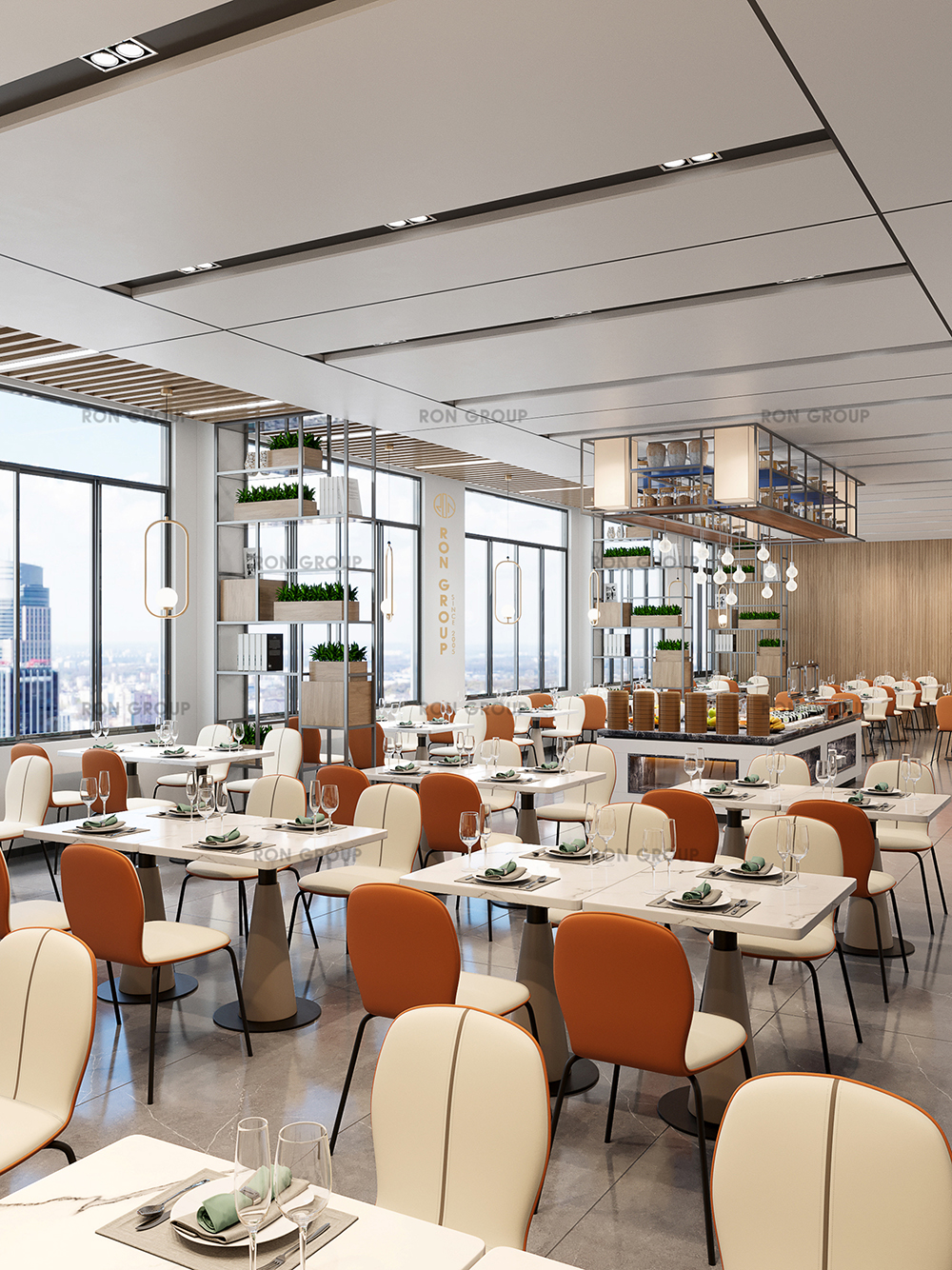
The dining chairs feature soft upholstered seats and backrests in a combination of ivory and terracotta tones, instantly softening the visual character of the space. Their curved silhouettes introduce warmth and residential comfort into a commercial environment.
The result is a dining room that feels less like a utility space and more like a place where people genuinely want to spend time.
In hospitality, that emotional difference matters.
Natural Elements Enhance the Guest Experience
Another defining characteristic of this concept is its connection to nature.
Floor-to-ceiling windows flood the dining area with daylight, while suspended greenery introduces movement, texture, and freshness overhead.
Combined with the furniture palette of white surfaces and wood accents, these natural elements help create a calming atmosphere that encourages guests to slow down and enjoy their meals.
Studies have shown that environments with natural cues often contribute to higher satisfaction and improved perceptions of comfort.
Simplicity Often Creates the Strongest Impact
One of the most impressive aspects of this project is what it deliberately avoids.
There are no extravagant chandeliers, elaborate partitions, or highly themed decorative elements.
Instead, the visual appeal comes from carefully balanced proportions, coordinated furniture finishes, and subtle color contrasts.
This restraint offers significant long-term benefits:
Lower renovation pressure
Timeless visual appeal
Broader user acceptance
Reduced maintenance complexity
For operators managing high-traffic dining environments, simplicity is often the smartest luxury.
From Visualization to Reality
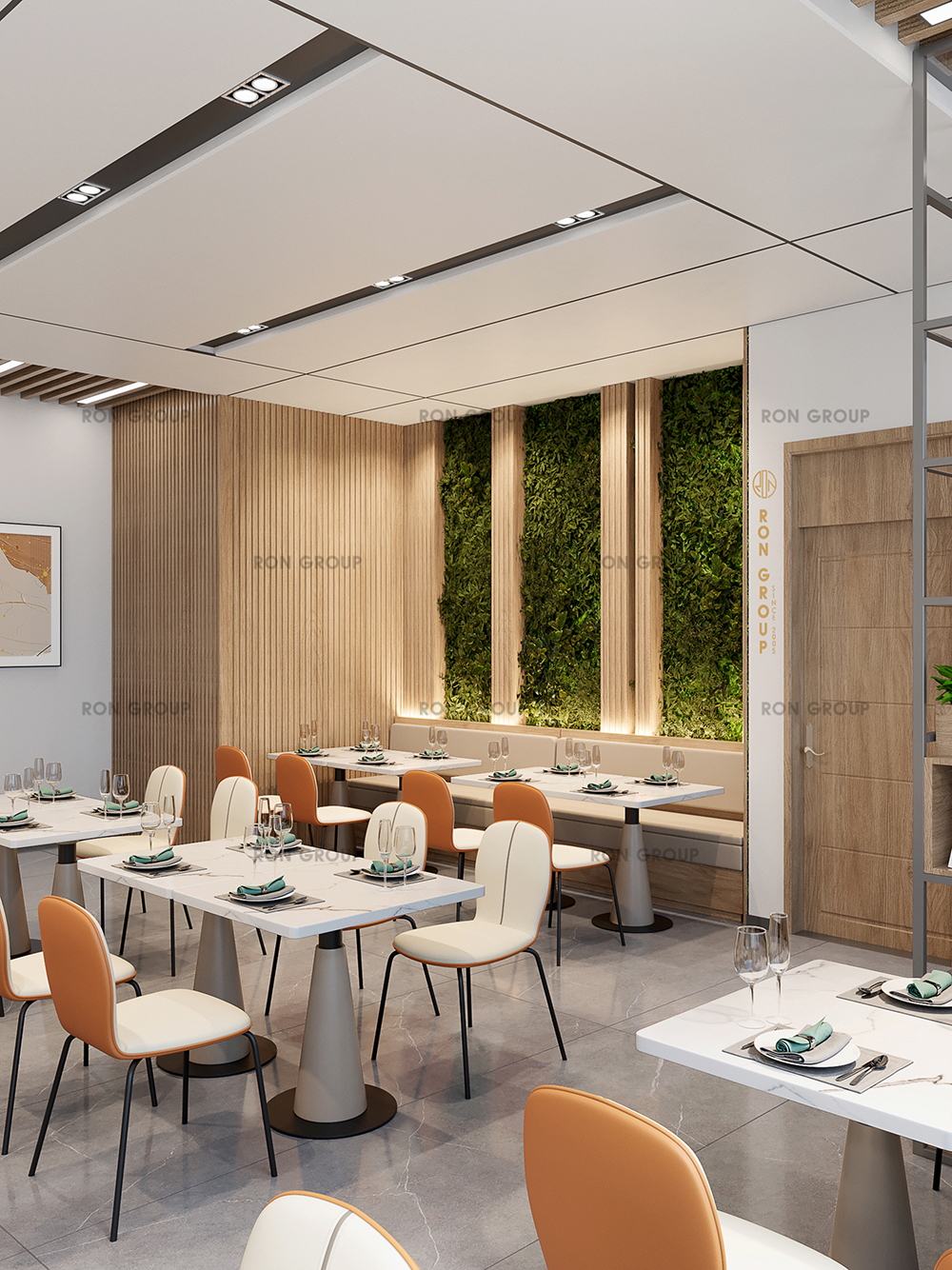
Before a single chair is manufactured or installed, the ability to visualize the complete dining experience can dramatically improve decision-making.
These renderings represent how RonGroup helps hospitality clients evaluate layouts, furniture combinations, and operational flow early in the planning process.
By identifying opportunities and potential challenges before execution, businesses can move forward with greater confidence and efficiency.
Conclusion
This modern cafeteria concept demonstrates that high-capacity dining spaces do not have to sacrifice comfort for efficiency.
Through modular furniture planning, warm upholstered seating, natural materials, and thoughtful circulation design, the project creates an environment that supports both operational performance and guest well-being.
Designed by RonGroup, these visualizations illustrate a simple but important principle:
The best restaurant furniture does more than fill a room. It shapes how people move, interact, and remember the spaces where they dine.


Ron Group
86-13380258855
sales@rongroup.co
