
Ron Wong
86-13380258855
sales@rongroup.co

The real problem: banquettes can look “high-end” while reducing profit
Banquette seating is popular because it photographs well and helps create zones. But in day-to-day operation, a banquette layout that is even slightly off can quietly reduce revenue in three ways:
You lose seats you thought you had
Table turns slow down because guests and staff struggle to move
Cleaning and repairs take longer, increasing labor and replacement cost
If you have a banquette line, a booth wall, or a built-in bench, treat it like an operational machine, not a decoration.
Mistake 1: Designing for photos instead of service flow
A banquette zone often becomes a “beautiful corridor” that staff hate during peak hours. When the aisle is too tight or the entry points are awkward, servers slow down, trays bump guests, and small delays repeat all night.
What actually works
Map the real service routes: kitchen → pass → table → POS → back to kitchen
Place banquettes where staff can serve without turning sideways, zig-zagging, or backtracking
Keep the main aisle clear of “photo furniture” like plants, decorative stools, and side tables that steal width
Quick check
During a busy moment, can two staff pass each other with plates without anyone stopping?
Mistake 2: Stealing aisle width to gain “one more seat”
Owners often push aisles tighter to gain capacity on paper. In reality, a tight aisle reduces capacity because it lowers table turn speed and raises guest discomfort.
What actually works
Design for peak-hour movement, not quiet-hour appearance
If you must add seats, do it where it doesn’t choke flow: adjust table sizes, reduce “dead corners,” or rethink entry positions
Quick check
Walk the aisle with a tray held at chest height. If you feel forced to rotate your shoulders, you have already lost efficiency.
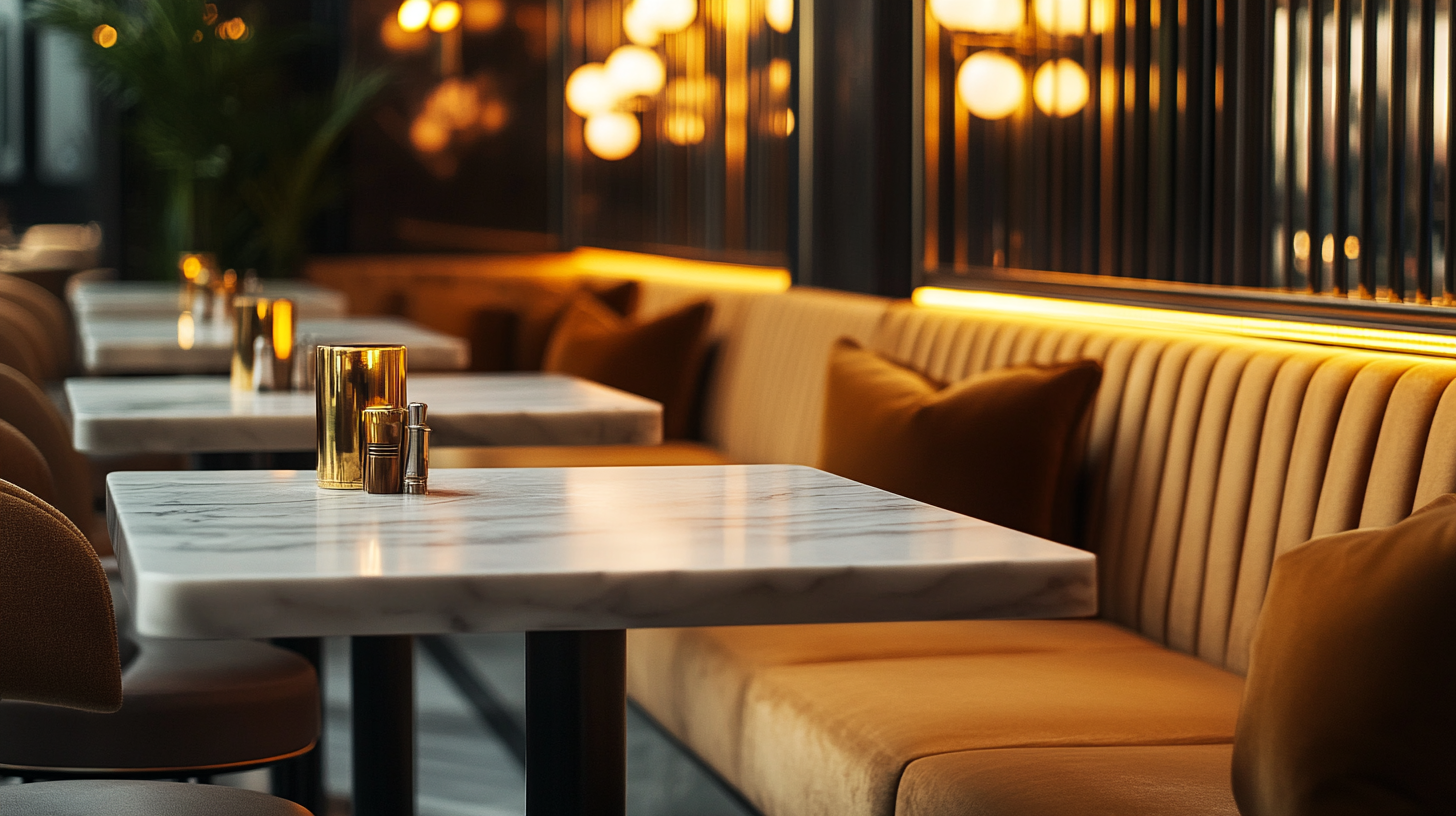
Mistake 3: Wrong table-to-bench relationship
Many banquette plans fail at the “micro geometry” level: the table edge, seat depth, and back angle don’t work together. Guests struggle to slide in, knees hit the underside, and coats and bags have nowhere to go. The result is slower seating and slower clearing.
What actually works
Balance comfort with efficiency: guests should sit down and stand up without dragging the table
Make sure the table doesn’t force guests to lean forward the entire meal
Avoid layouts where staff must pull chairs or tables every time a party sits
Quick check
Time how long it takes two people to sit and stand without moving the table. If it becomes a “shuffle,” it’s a revenue leak.
Mistake 4: Building a base that traps dirt and increases cleaning labor
A beautiful enclosed banquette base often becomes a dirt trap. Crumbs, spills, and dust collect where mops cannot reach. Cleaning becomes slower, and odors appear sooner.
What actually works
Use base designs that allow fast daily cleaning
Avoid deep grooves, sharp ledges, and unsealed gaps
Choose toe-kick and base details that don’t create “black holes” for crumbs
Quick check
Can your cleaner reach under and around the base without special tools? If not, you are paying extra labor forever.
Mistake 5: Choosing materials that cannot survive daily wipe-down
Restaurants wipe surfaces far more than homes. Many “nice” materials fail under frequent disinfecting. Sticky surfaces, fading, cracking, and seam failure are often caused by chemical exposure and abrasion, not “bad luck.”
What actually works
Select materials specifically for commercial cleaning frequency
Prioritize stain resistance and seam durability in high-traffic zones
Avoid delicate finishes where contact is constant: seat front edges, outside corners, and aisle-side faces
Quick check
Ask: “What happens after 1,000 wipe-downs?” If nobody can answer, the spec is risky.
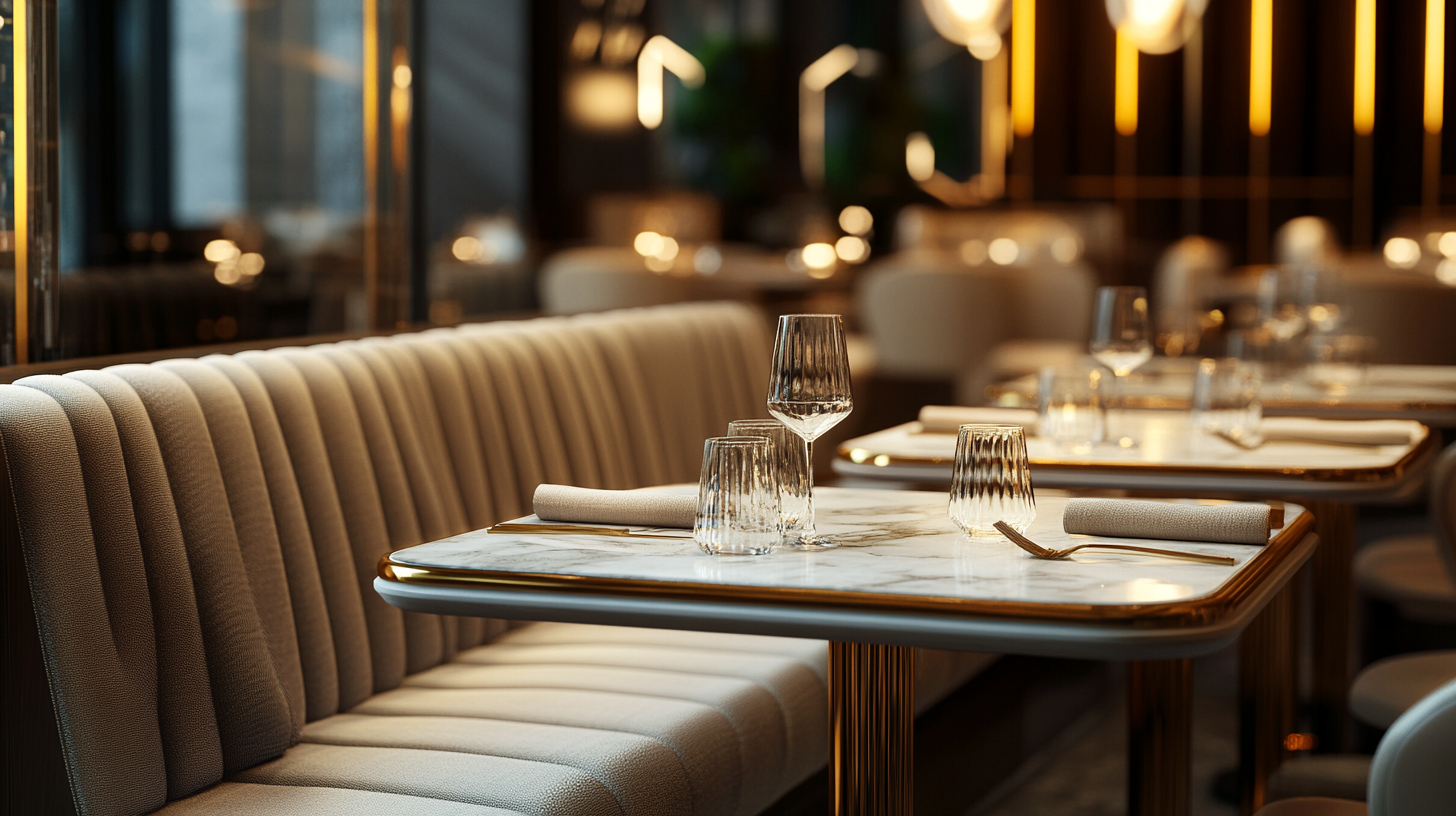
Mistake 6: Back angle and cushion build that looks sleek but hurts comfort
A banquette that looks slim can feel uncomfortable after 20 minutes. Uncomfortable seating does not automatically increase table turns in a good way. It often increases complaints, reduces repeat visits, and creates negative reviews.
What actually works
Aim for “comfortable enough to stay, structured enough to reset fast”
Use cushion density and support that resists sagging and keeps shape
Keep back support at a practical angle for dining, not lounge-only styling
Quick check
Sit for 15 minutes. If you constantly reposition, guests will too.
Mistake 7: Ignoring the operational reality of corners and end seats
Corner seats are the silent killers: hard to enter, hard to clean, and often the first to wear out. End seats next to aisles get the most friction and damage.
What actually works
Use rounded or softened edges where people slide in and out
Protect aisle-side corners with durable finishes and smarter detailing
Avoid layouts that force guests to climb over each other for corner access
Quick check
Can a guest reach the inside seat without the outside guest standing? If not, that seat will underperform.
Why commercial banquette design is different from residential seating
Commercial seating faces:
Higher seating cycles per day
Frequent sliding and abrasion
Daily disinfecting and stronger cleaning chemicals
Higher spill risk and faster odor buildup
Higher replacement cost from downtime, not just purchase price
A “home-style” bench might look identical on day one, but the restaurant version must be designed for a completely different failure pattern.
Field checklist: make the right decision on-site
Use this checklist before you approve a layout or sign off on production:
Can staff pass each other with trays during peak hours?
Can guests sit and stand without moving the table every time?
Are corner and aisle-side seats protected from damage and friction?
Can cleaning tools reach base areas quickly every day?
Are high-contact surfaces specified for repeated wipe-down and abrasion?
Will seat comfort remain acceptable after months of use, not just day one?
Is the banquette zone reducing dead space without creating bottlenecks?
Decision-level conclusion
If your banquette layout slows flow, traps dirt, or forces constant furniture adjustment, it will cost you more than it adds—optimize for movement and maintenance first, then style.


Ron Group
86-13380258855
sales@rongroup.co
