
Ron Wong
86-13380258855
sales@rongroup.co

The real problem: upholstery fails fast because restaurants are chemical environments
When upholstery fails in six months, most buyers assume they “bought wrong” or the factory “used poor quality.” In reality, the most common cause is simpler:
The material was never designed for daily commercial cleaning, abrasion, and humidity.
Restaurants are not living rooms. Your seating faces:
Repeated sliding and friction from clothing
Spills, oils, sauces, alcohol, and sweat
Daily wipe-down and disinfecting
High humidity zones near kitchens and doors
Faster wear at edges, seams, and corners
If you don’t match upholstery to this reality, failure is predictable.
Failure mode 1: Peeling and flaking
Peeling usually comes from a coating breakdown. Many upholstery surfaces rely on a top layer that looks great initially but breaks down under abrasion and cleaning chemicals.
Why it happens
Repeated disinfecting weakens the finish
Friction concentrates at seat front edges and aisle-side corners
Heat and humidity accelerate coating degradation
What actually works
Choose upholstery built for repeated wipe-down and abrasion
Focus on durability at contact points: seat front edge, outside corner, top of backrest
Specify edge reinforcement and durable seam construction in high-traffic areas
Failure mode 2: Odor buildup that never fully goes away
Odor is not only “dirty cleaning.” It’s often a design and material issue: moisture and oils get into layers, and the seat becomes a sponge.
Why it happens
Breathability vs sealing is out of balance
Seams and stitching allow liquids to migrate inward
Foam holds odor when it absorbs moisture over time
What actually works
Select materials that resist absorption and clean quickly
Use construction that reduces pathways for liquid penetration
Prefer upholstery systems designed for hospitality cleaning routines
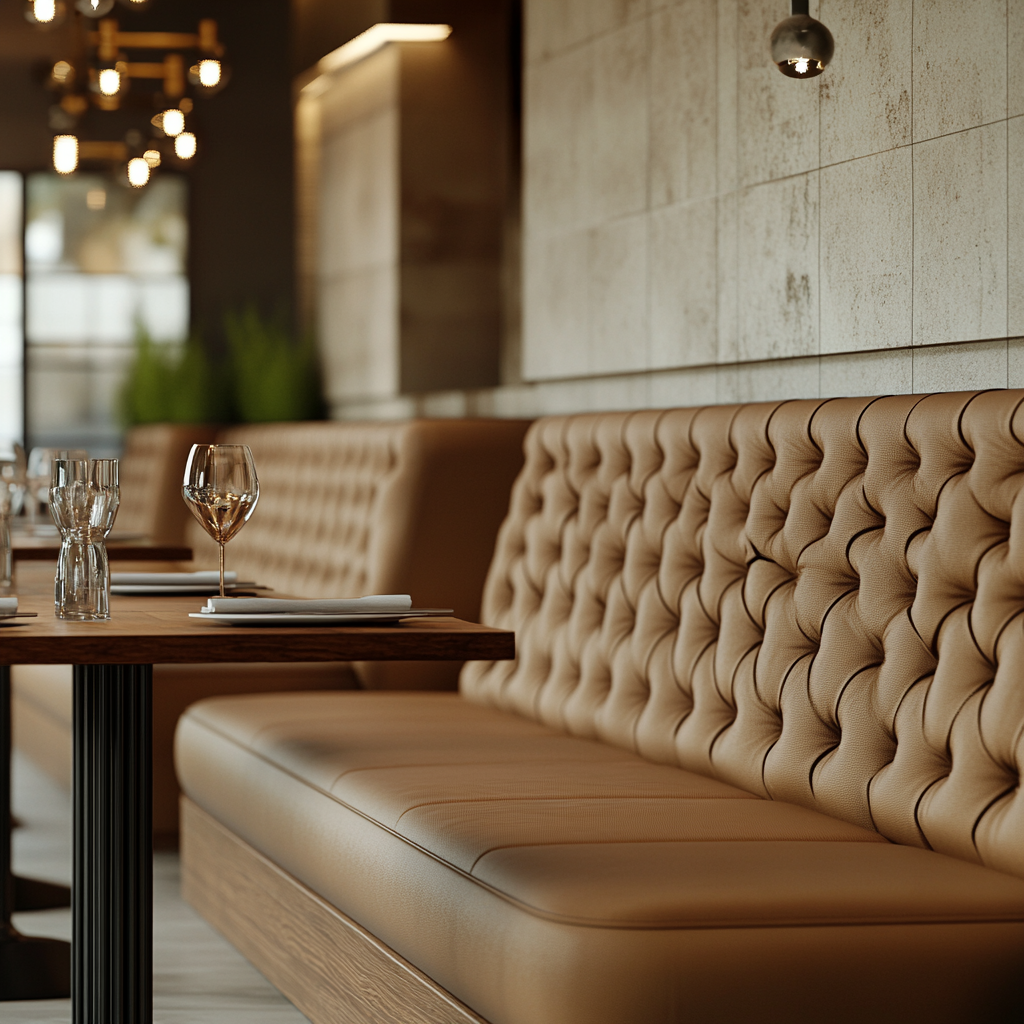
Failure mode 3: Cracking, especially on backrests and seat edges
Cracking is common where the surface stretches and flexes repeatedly. It is also common where cleaning chemicals dry out or attack the finish.
Why it happens
Material is too rigid for repeated flexing
Top layer loses elasticity under cleaning exposure
Temperature swings and sunlight accelerate brittleness
What actually works
Choose materials that keep flexibility under daily use
Avoid delicate finishes in direct sunlight or near hot zones
Protect high-flex zones with smarter paneling and reinforcement
Failure mode 4: Seam splitting and stitching failure
Seams fail before the surface fails when thread, stitch density, or seam design is not commercial-ready.
Why it happens
Stitching not designed for high cycle seating
Seams placed at maximum stress points
Poor reinforcement at corners and edges
What actually works
Use seam placement that avoids peak stress lines
Reinforce corners and transitions
Prioritize build quality in stitching and joining, not just surface appearance
Failure mode 5: Flattened cushions and “tired-looking” seats
A seat can look old even if the surface survives. Once cushions flatten, the whole space feels cheaper and guests notice.
Why it happens
Foam density and support structure are not designed for daily turnover
High-traffic seating compresses quickly
Heat and humidity speed up loss of resilience
What actually works
Specify cushion systems designed to keep shape under repeated use
Select builds that can be serviced or refreshed without rebuilding the entire seat
Protect the seat front edge where compression is highest
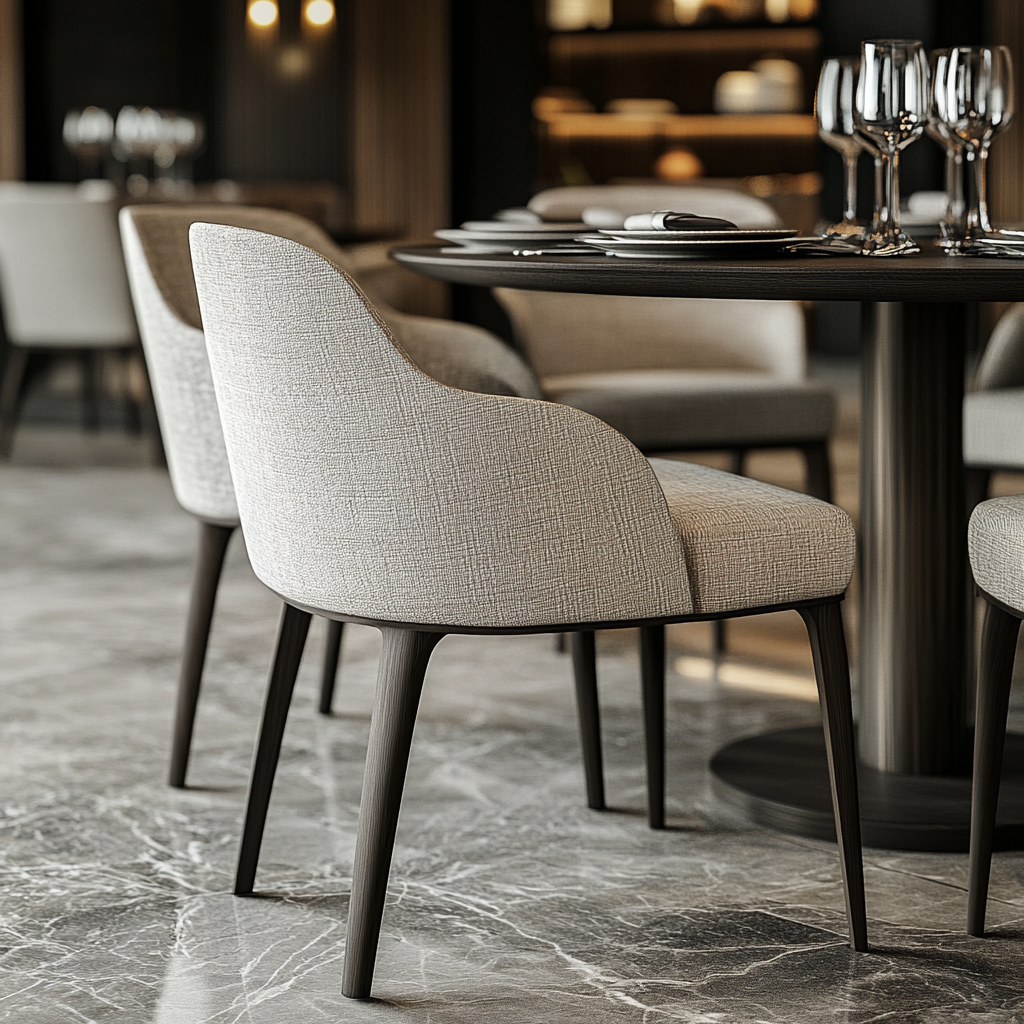
Why commercial upholstery is different from home upholstery
Residential upholstery is designed for lower frequency use, gentler cleaning, and less aggressive chemicals. Commercial upholstery must handle:
Daily disinfecting without surface breakdown
Continuous abrasion without peeling
Frequent spills without absorbing odor
Long-term shape retention under high turnover
If you choose upholstery like you choose a sofa for your home, you are almost guaranteed to replace it early.
How to choose the right upholstery for your restaurant
Step 1: Start with your cleaning reality
Before you choose any material, answer these operational questions:
What cleaning agents do you use today?
How many wipe-down cycles happen per day per seat?
Do you disinfect after each guest, nightly, or weekly?
Are you near coastal humidity, open doors, or outdoor seating?
If your cleaning is aggressive, you need upholstery that is “disinfectant-safe” in real life, not only in marketing.
Step 2: Match material choice to your concept and traffic
Use a practical rule:
High turnover and frequent disinfecting: prioritize wipe-down durability and stain resistance
Long-stay, comfort-led concepts: prioritize breathability and comfort, but still require commercial-grade cleaning compatibility
Bars and alcohol-heavy areas: prioritize chemical resistance and easy stain release

Step 3: Focus on the parts that fail first
Most failures happen here:
Seat front edge
Aisle-side corners
Top edge of backrest
Stitch lines near stress points
A “good” upholstery spec is one that protects these zones, not one that only looks premium in a showroom.
Quick selection checklist for buyers and designers
Use this before approving any upholstery selection:
Will it survive repeated disinfecting without peeling or cracking?
Does it clean fast without absorbing oils and odor?
Are seams and corners reinforced for daily high-cycle use?
Will the cushion keep shape after months of turnover?
Is the material choice aligned with traffic level and concept type?
Are the highest-contact areas protected by design, not hope?
Decision-level conclusion
If your upholstery cannot handle your real cleaning routine and daily abrasion, it will fail quickly—specify for chemicals, contact points, and service life first, then choose the look.


Ron Group
86-13380258855
sales@rongroup.co
