
Ron Wong
86-13380258855
sales@rongroup.co

Sustainability Has a Reality Check: Service Conditions
Restaurants demand more from furniture than almost any other environment. Pieces are moved hundreds of times, cleaned repeatedly with strong chemicals, and exposed to impacts and moisture. If furniture fails early, the replacement footprint is worse—more shipping, more waste, more cost.
So the first principle is straightforward:
The most sustainable furniture is the furniture you don’t replace.
That is why sustainability must be paired with performance specifications, not only materials marketing.
What “Sustainable” Should Mean in Restaurant Procurement
A sustainable purchase should achieve these outcomes:
Long, stable service life
Lower repair frequency and lower operational waste
Replaceable components instead of whole-unit replacement
Materials and finishes that withstand real cleaning routines
Consistent re-order ability, so you don’t discard sets due to mismatch
In practical terms, sustainability is a procurement strategy: lifecycle value, not just an origin story.
The Core Concept: Repairable Furniture Beats “Disposable Premium”
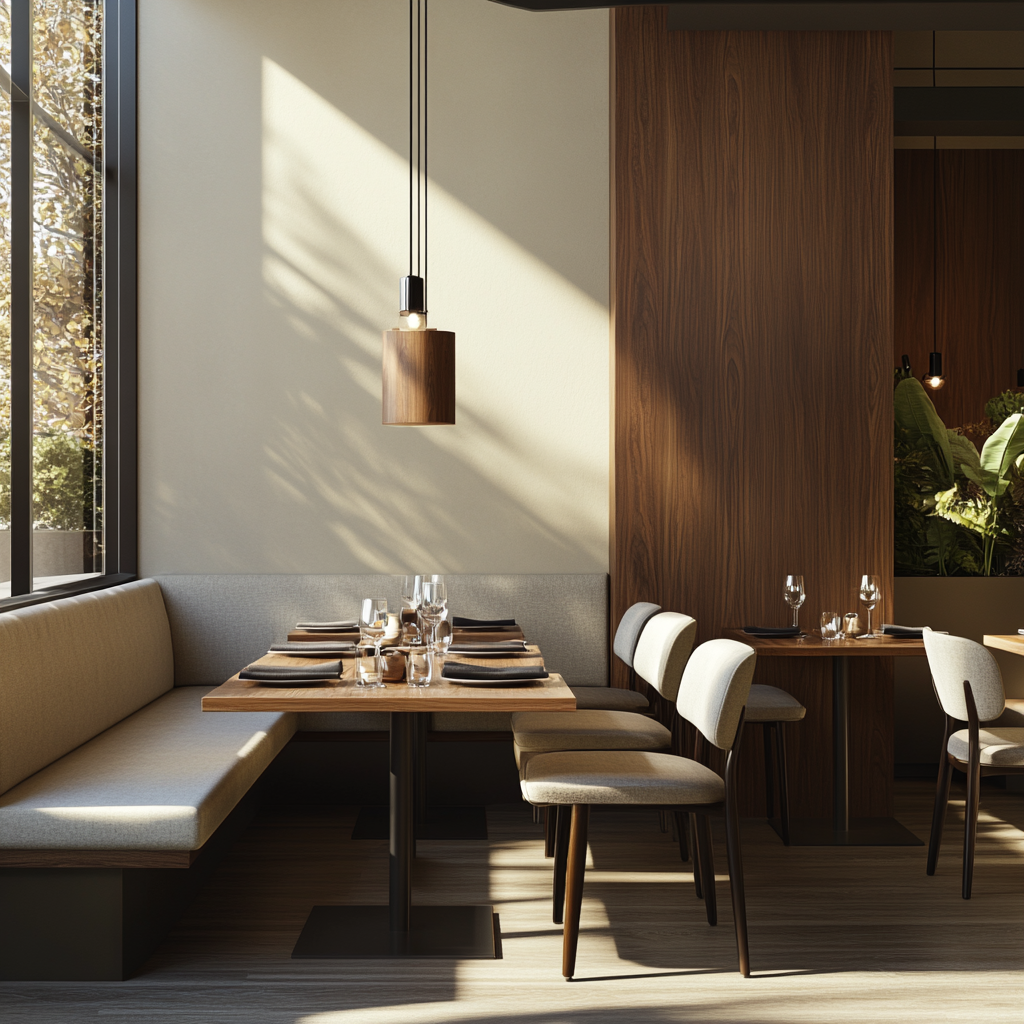
If you want sustainability that works in operations, prioritize repairable furniture.
Look for designs with:
Replaceable glides and leveling feet
Modular cushions or upholstery panels
Accessible fasteners and standard hardware
Frames that can be tightened, not only glued
Clear spare-part availability
Repairability reduces waste and reduces downtime. It also protects brand consistency because you avoid mismatched emergency replacements.
Materials That Work: Eco Materials Commercial Grade (Without the Fantasy)
Not all “eco” materials behave well in restaurant service. The key is to select eco materials commercial grade—materials that are environmentally improved while still engineered for high-frequency use.
1) Wood: Solid vs Veneer vs Engineered Cores
Solid wood can be durable and refinishable, but requires stable humidity control and proper sealing.
Veneer can be efficient and consistent when backed by stable cores and sealed edges.
Low-grade boards are risky in humid or spill-heavy environments.
Sustainable wood decisions should be paired with:
Certified sourcing where relevant
Edge sealing requirements
Clear repair/refinish expectations
2) Metals: Durable, Recyclable, and Often the Best Lifecycle Choice
Metal frames and bases can be long-lasting and recyclable. The sustainability performance depends on:
Thickness and structural design
Coating system quality
Corrosion resistance for humid/coastal climates
Metal is often a strong choice for restaurants because it supports long service life and straightforward repairs.
3) Upholstery: Don’t Confuse “Soft” With “Sustainable”
Some fabrics market sustainability but fail quickly under cleaning. For restaurants, the sustainable choice is the one that:
Resists staining and cracking
Matches cleaning chemistry
Maintains appearance under frequent wiping
Can be replaced modularly if damaged
A “green” fabric that stains permanently and is replaced every year is not sustainable in practice.
Finishes: Durable Finishes Are the Sustainability Engine
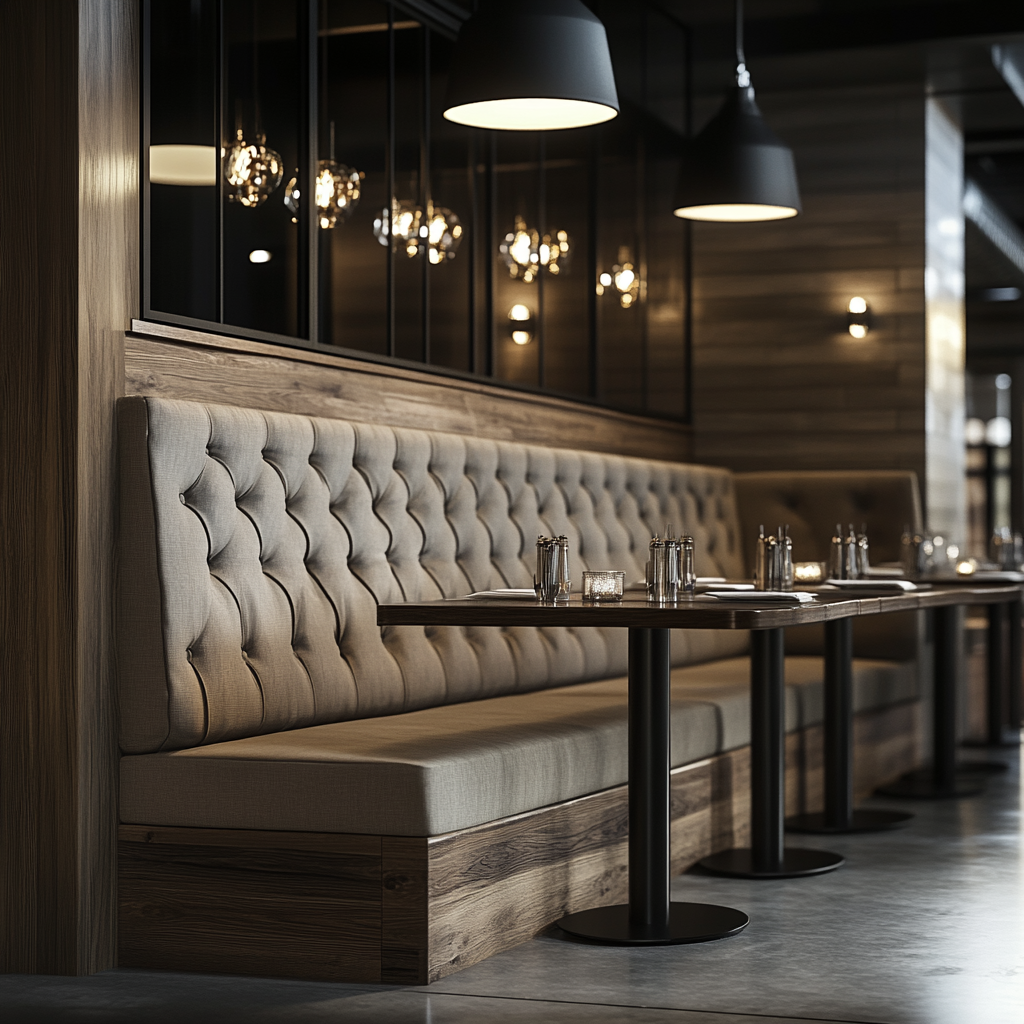
A finish is not decoration. It is the barrier between daily cleaning and material degradation. Good durable finishes extend service life dramatically.
Powder Coating for Metal
Typically a strong option when specified correctly:
Good abrasion and cleaning resistance
Stable appearance over time
Repairable with touch-up strategies depending on damage level
Specify gloss level, color code, and corrosion requirements based on site conditions.
PU / Lacquer Systems for Wood
High durability when properly applied, but you must confirm:
Chemical resistance to your cleaners
Edge sealing performance
Touch-up and repair feasibility
Water-Based Finish: When It Works, and What to Specify
A water-based finish can be a smart sustainability choice, but only when performance is contract-grade.
In your PO, don’t write “water-based paint” alone. Specify:
Required abrasion resistance
Cleaning chemical compatibility
Gloss range and color tolerance
Edge sealing requirements for spill zones
Water-based finish is not automatically durable. The system must be specified and verified.
What to Put in Your Specs (So Sustainability Doesn’t Fail on Site)
If you want sustainable decisions that survive real service, write these into procurement documents:
A) Lifecycle Requirements
Expected service life range by category (chairs, tables, banquettes, outdoor)
Re-order consistency requirements (finish codes, batch control where possible)
B) Cleaning Compatibility
List cleaning chemicals used on site
Require confirmation that materials and finishes are compatible
Define unacceptable failure outcomes (peeling, haze, discoloration, cracking)
C) Repairability Requirements
Wear parts must be replaceable (glides, feet, cushions)
Spare parts availability and lead time
Repair instructions or support plan for the operator
This is where repairable furniture becomes a measurable requirement, not a slogan.
Sustainable Design Choices That Also Improve Operations
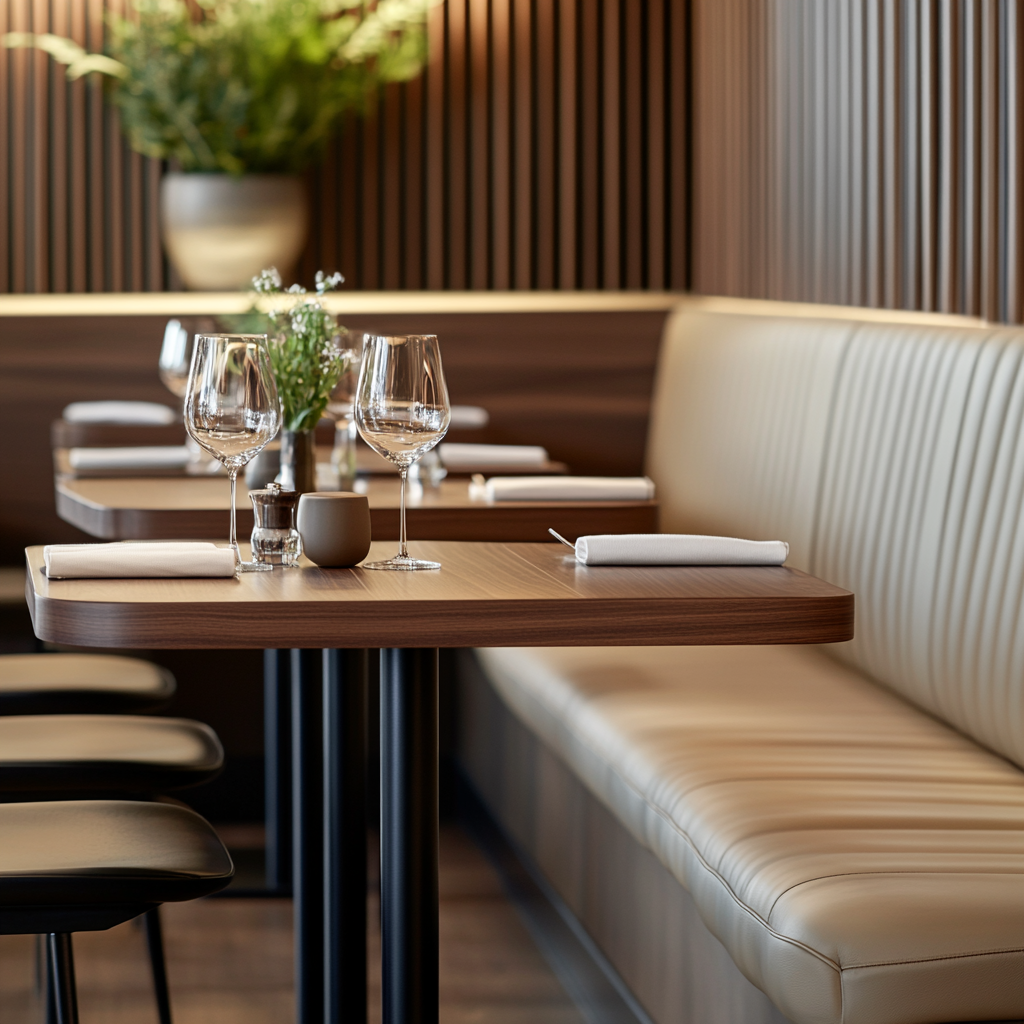
Sustainability should simplify operations, not complicate them.
Strong examples:
Replaceable seat cushions instead of fully upholstered shells
Standardized hardware across chair models
Stackable or space-efficient designs that reduce transport and handling damage
Table bases with stable leveling systems to prevent repeated service calls
Operational efficiency is sustainability in action.
Common Sustainability Traps to Avoid
Trap 1: “Eco” Without Durability
If it fails early, you lose twice: higher replacement footprint and higher total spend.
Trap 2: Finishes That Can’t Handle Restaurant Cleaning
If the finish fails, the furniture is effectively disposable.
Trap 3: No Spare Parts Plan
Without a spare parts path, a minor issue becomes full replacement.
Closing: Sustainable That Lasts Is the Only Sustainable That Matters
The market will keep pushing sustainability. The winners will be brands that combine it with real service performance.
If you want, we can help you build a sustainable specification package—selecting eco materials commercial grade, matching them with durable finishes, confirming water-based finish performance where appropriate, and designing for repairable furniture so your sustainability goals survive daily service, not just marketing campaigns.


Ron Group
86-13380258855
sales@rongroup.co
